
From call to alert, in six steps.
Concretely, here is what Kin-Guard does when an unknown number calls you.
- 1
You activate Kin-Guard on your line, or that of a loved one, in a few minutes.
- 2
Calls from your known contacts go through normally. Unknown calls are first handled by the assistant.
- 3
The assistant introduces himself, explains his role, and asks the caller his identity and reason. If the call is recorded, it notifies the caller.
- 4
Depending on the response, the assistant forwards the call, takes a message, or blocks and reports.
- 5
During sensitive calls, the assistant stays tuned for scam signals. If the signals become clear, he may cut off the conversation.
- 6
If a call is disconnected, the assistant calmly explains why, without judgment, and tells you what to do next.
For each unknown call, three possible exits.
No gray area. Each call is processed and then classified.
Transmitted
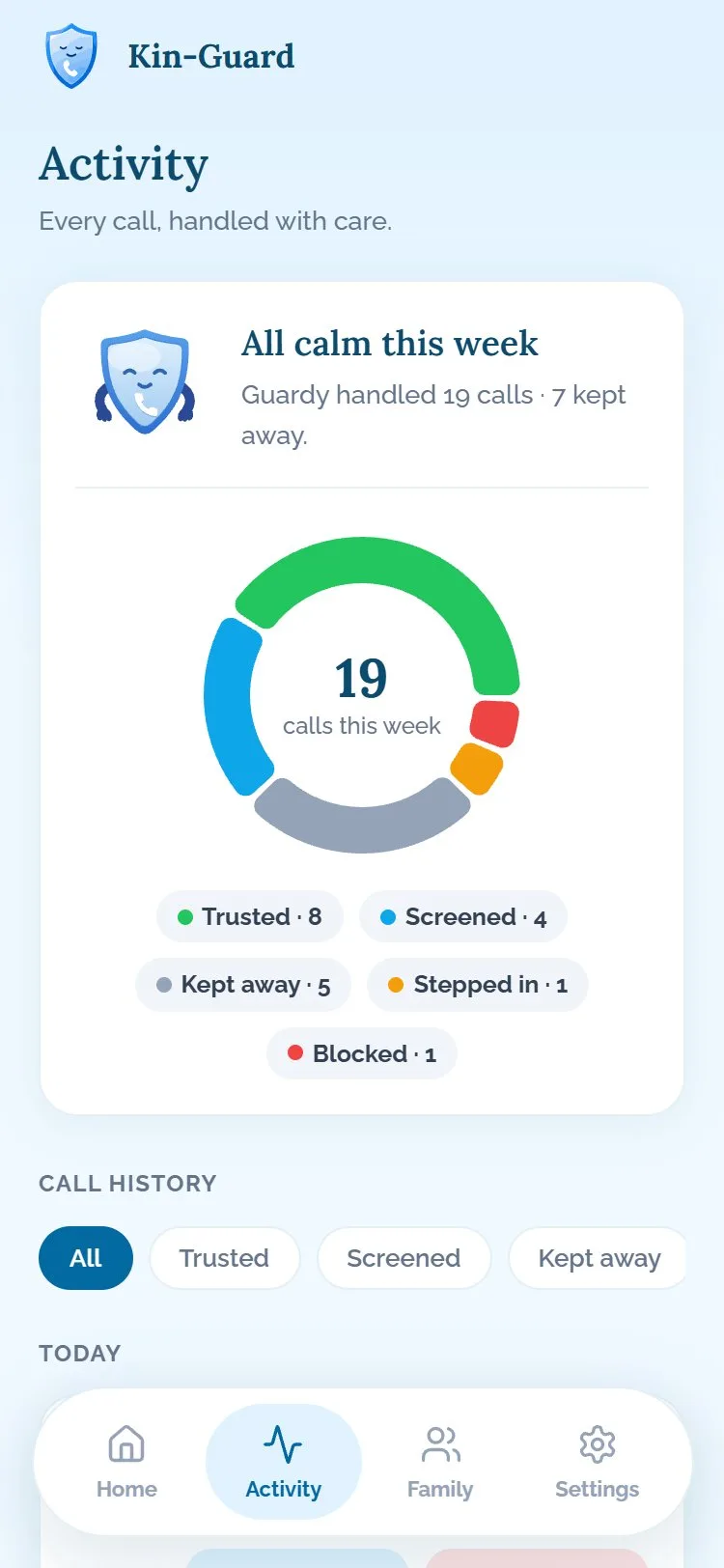
Kin-Guard recognized a legitimate call and made it to you.
Message taken
Kin-Guard is not certain: it keeps track for you.
Blocked and reported
Kin-Guard detects suspicious intent and stops the call.
What Kin-Guard does not do.
As important as what he does: what he refuses to do for you.
-
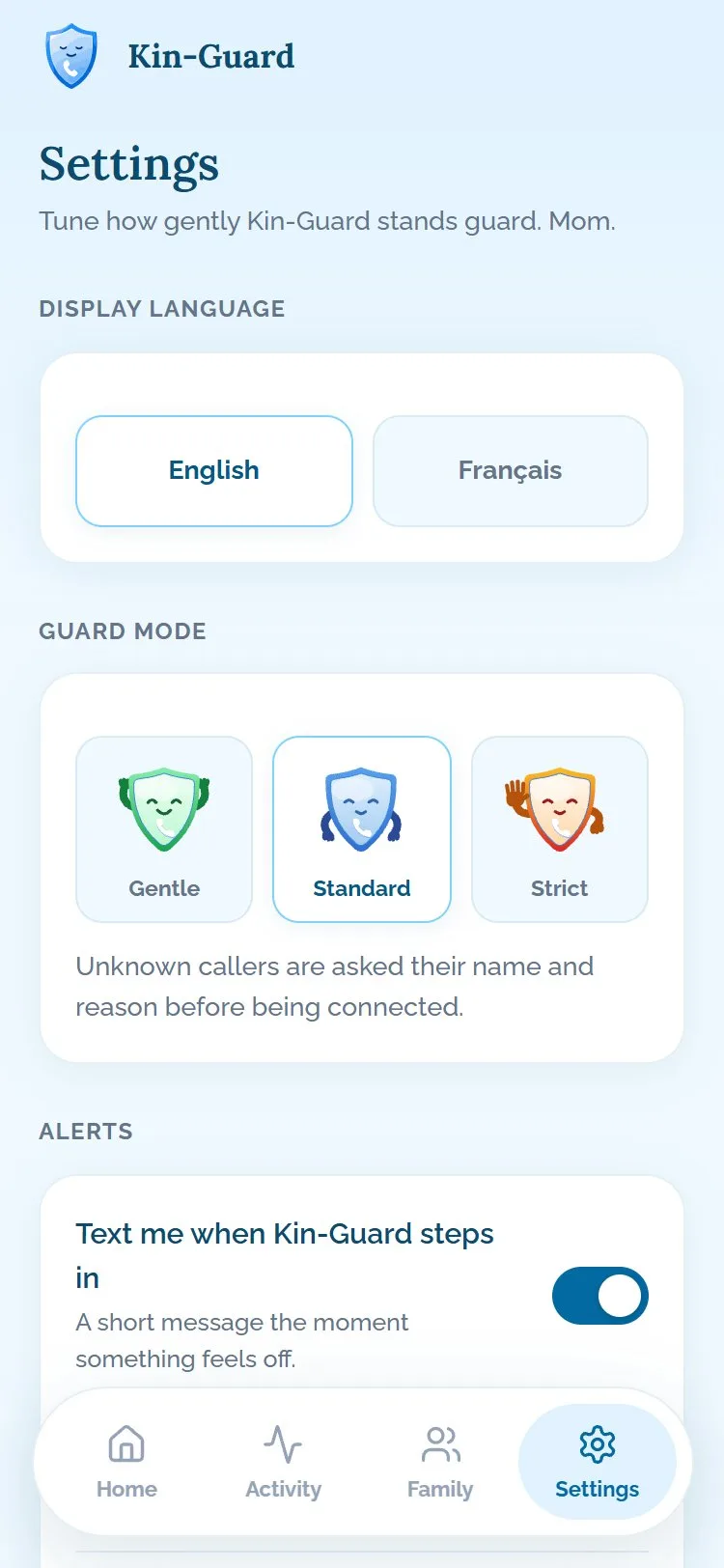
Don't decide alone what's important to you. You keep control over the whitelist, contacts and filter sensitivity.
-
Does not replace your judgment. In case of serious doubt, the trusted contact takes over.
-
Does not guarantee 100% perfect protection. No tool can.