
Understanding scams means protecting yourself from them.
These scams are designed to deceive. Being fooled has nothing to do with a lack of intelligence. We explain each scenario clearly, without undue fear, to help you recognize the signals.
A telephone scam is a call (or an SMS) that seeks to make you act against your interests: communicate a code, an identifier or a card number, validate a transfer, or let an ill-intentioned person into your home. The scammer does not play on technique, but on emotion — urgency, fear, authority, affection. The simple rule: any sensitive request by telephone must be verified by hanging up and calling back an official number yourself.
According to Cybermalveillance.gouv.fr, requests for assistance for the fake bank advisor scam jumped by +159% in 2025, with 15,000 reports over the year – just one example among the ten scenarios detailed below.
How to recognize phone scams?

The fake bank advisor: why it is the most profitable scam in France.
They know your first name, your bank, sometimes the amount of your last transactions. Understanding how they operate means knowing how to recognize them.
Read the article
“Grandpa, I had an accident, don’t tell Mom”: the fake emergency loved one.
The scam targets the strongest emotional ties. Emotional pressure is designed to bypass all reasoning.
Read the article
Fake tech support: “Your computer is infected, give us access.”
They imitate Microsoft, Orange, Free or your bank. The objective: to obtain remote access to empty your accounts.
Read the articleThe fake delivery person and fake customer service: the gateway to phishing.
An SMS or a call that seems to come from La Poste or Amazon – how to spot the manipulation before it succeeds.
Read the article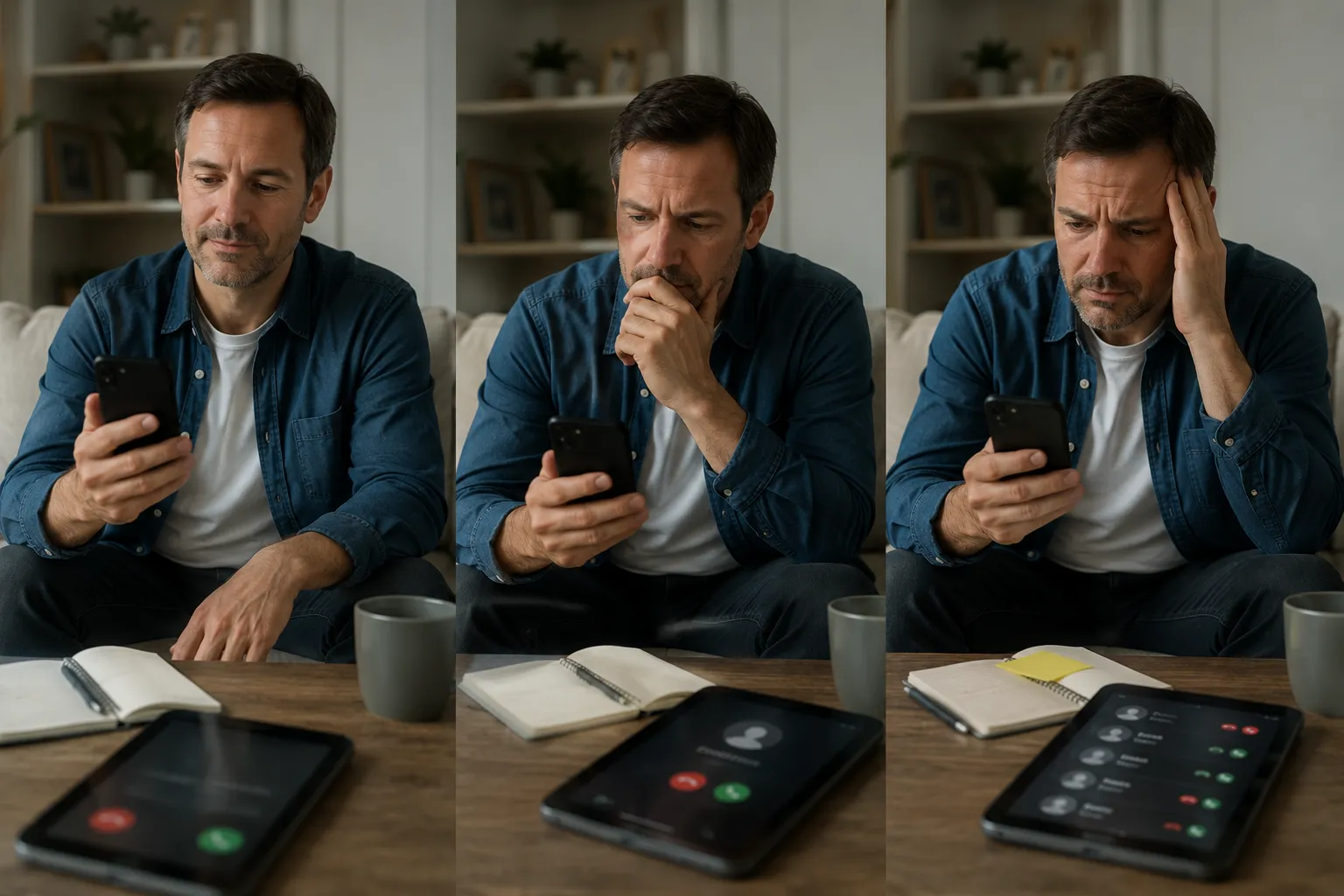
Progressive manipulation: a call that starts normally and drifts.
The most skillful scammers don't ask for anything suspicious at first. They build trust step by step, call by call.
Read the articleWhat to do after giving sensitive information over the phone.
You hung up and something is bothering you. Here are the actions to take in the following hours, without panicking.
Read the articleWhy a classic spam filter is no longer enough.
Numbers blocked yesterday are replaced tomorrow. New scams don't fall into lists — they're built to get out of them.
Read the articleThe false gendarme and the false policeman: when authority becomes the bait.
The brigade number is actually displayed on the screen. What the police will never ask you, and how to check in a minute.
Read the articleNumber theft: why the display proves nothing.
Any number can be displayed on your screen. What French law has protected since 2024 — and what it does not protect.
Read the articleCold calling: what changes on August 11, 2026.
Consent required, end of Bloctel. Good news for peace of mind — but not for the risk of scam. Here's why.
Read the articleThese guides are updated regularly and new articles are published. Subscribe to the waiting list to be informed of updates.