Cold calling: what changes on August 11, 2026 — and what it doesn’t change
Telephone canvassing is an unsolicited sales call from a professional who is trying to sell you a good or service. From August 11, 2026, this canvassing becomes prohibited without your prior consent, and the Bloctel list disappears. This is real progress for peace. But for an elderly parent, the question that matters is different: does it reduce the risk of being scammed? The honest answer is no.
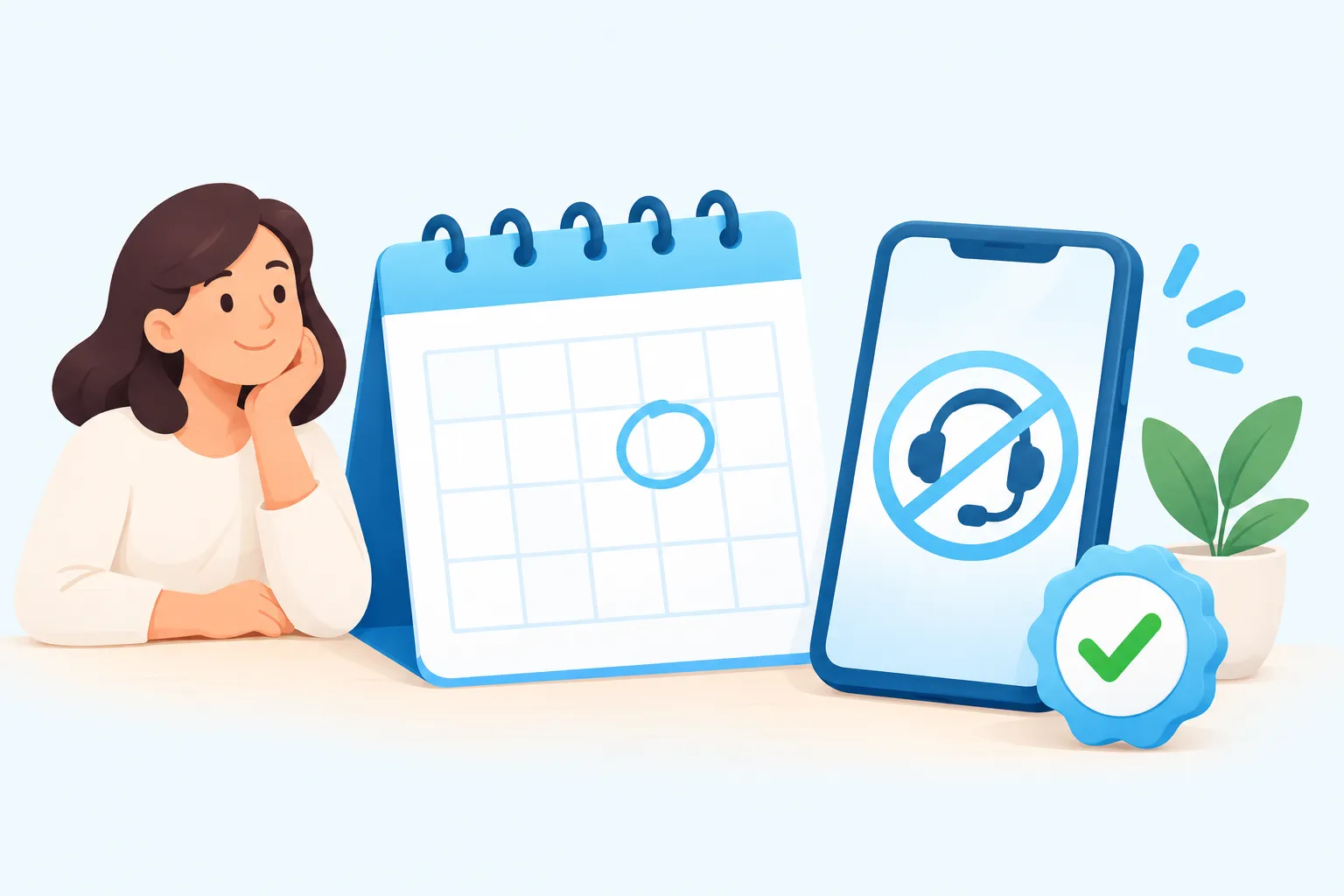
In summary: France is moving from a regime of opposition (we could call you, unless you had registered on Bloctel) to a regime of prior consent (we can only call you if you said yes). The change arises from the law of June 30, 2025, clarified by the decree of July 23, 2026, and applies from August 11, 2026. Fraudulent calls were already illegal – and remain so, with no practical change for the scammers.
What actually changes on August 11, 2026?
-
Consent must be explicit. It must be free, specific, enlightened, unambiguous and revocable, expressed by a clear positive act. A box already checked is worthless, and agreeing to terms and conditions is not enough.
-
It is limited in time. One year maximum, without tacit renewal. The company must tell you this duration and specify the nature of the goods or services concerned.
-
You can withdraw it at any time, including orally, during the call. The professional must then end the call without delay.
-
The burden of proof lies with the company. It is no longer up to you to demonstrate that you refused: it is up to the professional to prove that he has your agreement, and to keep it.
-
A contract obtained in violation is not valid. Any contract concluded following canvassing which does not respect these rules is void, and the company is exposed to administrative sanctions.
-
Two exceptions remain. An appeal relating to a current contract remains possible. And if you have expressly requested to be reminded about energy renovation or adaptation of housing to old age and disability, the reminder is accepted within a short period of time.
What happens to canvassing before and after August 11?
Canvassing is authorized by default. To no longer be called, you must register on Bloctel. Calls are permitted Monday to Friday, 10 a.m. to 1 p.m. and 2 p.m. to 8 p.m., and prohibited on Saturdays, Sundays and public holidays.
Canvassing is prohibited in principle. Explicit prior consent is required, valid for a maximum of one year. Bloctel becomes irrelevant and disappears. Silence no longer constitutes authorization.

Why won't the reform stop the scams?
The reform is aimed at companies that want to sell legally. A scammer does not fit into this framework: he is already committing a scam, often coupled with identity theft. Three reasons explain why the new rule leaves him indifferent.
- He already didn't follow any rules. Bloctel, time slots, the ban on spoofing a number: none of this has ever stopped a fraudster. Adding a consent requirement does not change its calculation.
- He is not calling from an identifiable setting. Fraudulent calls frequently go through platforms located outside France and through spoofed numbers. The administrative sanction requires an identifiable company to be sanctioned.
- Its leverage is not commercial, it is emotional. The fake bank advisor or the fake policeman sells nothing: he creates urgency and fear. No prospecting rules apply to this.
There is even a perverse effect to watch out for. If legitimate sales calls become rare, a loved one may conclude that an unknown call must be harmless — “since it’s forbidden now.” However, the share of unknown calls of fraudulent origin is not decreasing. Less noise does not mean less danger.
What can you do to really protect an elderly loved one?
-
A simple and absolute rule, repeated as a family: we never communicate a code received by SMS, a banking identifier or a card number over the phone. No exceptions, whoever you speak to.
-
The reflex to hang up and call back yourself, with a number that we already have: the one on the back of the bank card, or 17 for the police and gendarmerie. Never dictate a number during the call.
-
Upstream filtering of unknown calls. It is the only mechanism that acts before the conversation – therefore the manipulation – begins. A filter by list of numbers is not enough : the numbers change constantly.

What does Kin-Guard change after August 11, 2026?
The law reduces the number of legitimate commercial calls. It says nothing about fraudulent calls, which will keep coming from unknown or spoofed numbers. Kin-Guard targets precisely those: the assistant answers in your place, or in your loved one’s, asks for the caller’s identity and reason, and analyses the typical signs of a scam — manufactured urgency, requests for a code, pressure to approve a transaction. The call is only put through if it is legitimate.
Frequently asked questions
Is cold calling completely prohibited from August 11, 2026?
It becomes prohibited in principle, but not absolutely. A professional can still call you if you have previously given free, specific, informed and unequivocal consent, or if the call concerns a contract that you have already concluded with him. A limited exception also exists when you have expressly requested to be called back for energy renovation or adaptation of housing to old age and disability.
Do you still need to register on Bloctel?
No. The opposition list loses its purpose with the reform. Since active consent is now required to call you, failure to register no longer means you agree to be contacted. There is therefore no further action to be taken on your side.
Will this new law make phone scams disappear?
No, and that's the main point. The reform regulates legal commercial canvassing. The scammers are already committing a criminal offense and did not respect Bloctel, nor the time slots, nor the ban on spoofing a number. THE fake bank advisor, THE fake policeman and the fake technical support will continue to call.
Can the reform increase the risk for an elderly person?
Indirectly, yes. A relative convinced that “canvassing is now prohibited” may lower their vigilance. And if legitimate sales calls decline sharply, a larger share of the remaining unknown calls will be fraudulent. It is useful to explain this nuance to the family rather than summarizing the reform with “we will no longer be called”.
What should I do if I am still approached after August 11, 2026?
Ask not to be called again: the professional must end the call without delay. A contract concluded under these conditions is not valid. Report unwanted calls and text messages to 33700, number spoofing via I alert Arcep, and an attempted fraud on cybermalveillance.gouv.fr.
Article written by Charlie BART, founder of Kin-Guard. Published on August 2, 2026. This article presents general information and does not constitute legal advice.
Sources: Service-Public.fr — Telephone canvassing prohibited: what are the new rules? · CNIL — Commercial prospecting by telephone · law no. 2025-594 of June 30, 2025 (article 13) and decree no. 2026-662 of July 23, 2026, articles L. 223-1 and R. 223-1 to R. 223-4 of the Consumer Code.

The law filters sellers. Kin-Guard filters out fraudsters.
- Early Access
- Introductory offer at €9.99 per month
- Installation help
Service under development: access by waiting list.